
1099 Reporting Threshold Rises to $2,000 for 2026
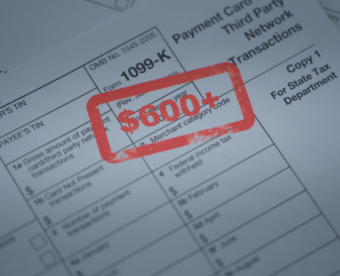
For decades, the reporting floor for Forms 1099-NEC and 1099-MISC has remained consistent, but changes are coming for the 2026 tax year. The One Big Beautiful Bill Act, signed by President Donald Trump, raises that floor for payments made on or after January 1, 2026, putting an end to the $600 floor that had been in place since 1954. The new threshold first applies to forms businesses will file in early 2027.
| Form | Before | 2026 |
| 1099-NEC | $600 | $2,000 |
| 1099-MISC | $600 | $2,000 |
| 1099-K (payment apps and card processors) | Scheduled to drop to $600 | Restored to over $20,000 and more than 200 transactions (applied retroactively) |
| W-2G (gambling winnings) | $600-$5,000, depending on the game | $2,000 for most games (poker tournaments remain over $5,000) |
| W-2 (applies only to wages with no withholding) | $600 | $2,000 |
What about Form W-2? For most employers, nothing changes. A W-2 is still required for any employee whose wages had any federal income tax, Social Security tax, or Medicare tax withheld. The higher threshold affects W-2 reporting only in rare cases where no tax is withheld from an employee’s pay.
Not every threshold changed. Only the $600 threshold went up. Other reporting thresholds stay the same, including the $10 threshold for royalties and the $5,000 threshold for direct sales of consumer products for resale. Payments such as gross proceeds paid to attorneys, interest, and dividends also have their own rules.
Who does this affect?
Businesses
Businesses that pay vendors and independent contractors no longer have to issue a 1099-NEC or 1099-MISC for total payments under $2,000. This should decrease year-end paperwork. If a vendor or contractor does not provide a taxpayer ID number, the new $2,000 threshold also generally determines whether backup withholding is required on these payments. Backup withholding on payment app and card transactions reported on Form 1099-K follows that form’s $20,000 and 200-transaction threshold. Employers must continue to issue W-2s to all employees whose wages had tax withheld.
What should businesses do?
- Continue collecting Forms W-9 from all contractors. It is easier to collect this information upfront than to track it down at filing time.
- Track all vendor payments throughout the year. The $2,000 test applies to each payee’s total for the year, so several small payments can add up to exceed the threshold.
- Check payroll and accounting software settings to ensure that they are following the new reporting requirements.
- Review state requirements. Some states have their own information-return rules and may not follow the federal threshold.
Independent Contractors and Freelancers
Contractors paid less than $2,000 by a single business during 2026 generally will no longer receive a Form 1099. It is important to remember that even though a form is not issued, the income is still taxable. All earned income must be reported on your tax return, even if under the reporting threshold.
What should contractors and freelancers do?
- Be vigilant in keeping a clean and accurate set of books. With fewer 1099s being issued and the 1099-K threshold back at $20,000 and 200 transactions, many contractors will receive few or no forms.
- Do not rely on 1099s to tell you what you earned. Individuals should compare their records with their bank deposits and payment app activity throughout the year.
Looking Ahead
The One Big Beautiful Bill affects not only the 2026 reporting threshold but also reporting thresholds for years to come. Beginning in 2027, this $2,000 floor is expected to increase as it will be adjusted annually for inflation. If you are an independent contractor, it is best to stay on top of your record-keeping to make tax time easier. Contact an AHP tax professional to learn how we can help you track your income and payments throughout the year so you are in a good position come tax filing time.